
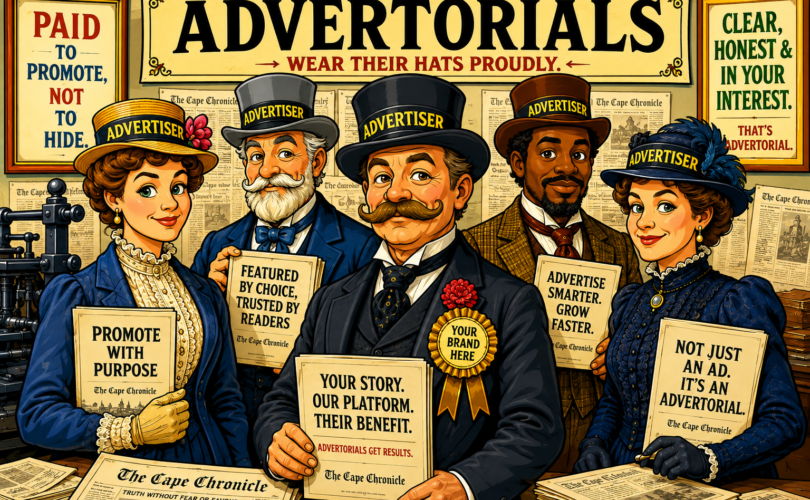
Flip through a magazine, scroll a news site, or read a “sponsored” post on social media, and there’s a good chance you’ve bumped into an advertorial without quite registering it as one. That’s precisely the point — and precisely why advertorials have become one of the more contested formats in modern marketing.
What Is an Advertorial?
An advertorial is paid content that is written and designed to look like independent editorial material — a news article, feature story, or expert opinion piece — but is actually created or commissioned by a brand to promote a product, service, or point of view. The word itself is a portmanteau of “advertisement” and “editorial,” and that hybrid identity is the whole strategy: borrow the credibility, tone, and format of journalism while carrying a commercial message underneath.
Online, the same idea goes by other names — “native advertising,” “sponsored content,” “branded content,” or “partner content.” Whatever the label, the mechanics are the same: a brand pays for placement, and the content is built to blend into its surroundings rather than interrupt them.
How Advertorials Differ from Conventional Ads
A traditional advertisement is unmistakably an ad. A banner, a billboard, a 30-second TV spot, or a full-page glossy ad all announce themselves as commercial messages — there’s a clear line between the ad and the surrounding content. Advertorials deliberately blur that line. A few key differences stand out:
- Format and voice: Conventional ads use persuasive, promotional language and imagery designed to sell. Advertorials adopt a journalistic voice — headlines, bylines, narrative structure, quotes, even “further reading” links — so they read like something a reporter or editor produced.
- Placement: Ads are typically confined to designated ad space (a sidebar, a pre-roll slot, a billboard). Advertorials are placed within the content stream itself, next to or between genuine articles.
- Disclosure: Traditional ads don’t need to explain what they are — they’re self-evident. Advertorials require some form of label (“Sponsored,” “Paid Partnership,” “Advertisement Feature,” “Promoted”) precisely because, without it, most readers wouldn’t be able to tell the difference.
- Persuasion mechanism: A conventional ad persuades through direct claims and repetition. An advertorial persuades by borrowing the audience’s trust in the publication or format — what researchers call the “halo effect” of editorial credibility transferring onto the sponsored message.
- Reader mindset: People approach ads with their guard up, activating what’s known as “persuasion knowledge” — an awareness that they’re being sold to. Advertorials often get read before that guard goes up, because the reader initially believes they’re consuming neutral content.
Why It Matters: The Disclosure Problem
The central controversy around advertorials isn’t that brands pay for content — that’s long-standing and, when properly labelled, unremarkable. The problem is recognition. A large body of international research (particularly work on native advertising disclosures by scholars like Wojdynski and colleagues) has repeatedly found that unless a sponsorship label is visually prominent — in size, colour, and placement — readers routinely fail to notice it at all, and therefore process the content with the same trust they’d extend to genuine journalism.
The South African Picture
South Africa’s regulatory and academic landscape reflects the same tension.
On the regulatory side, the Advertising Regulatory Board (ARB) — the industry’s self-regulatory body that succeeded the old Advertising Standards Authority in 2018 — administers South Africa’s Code of Advertising Practice, which requires that advertorials and sponsored content be clearly identifiable as advertising rather than independent editorial. This isn’t a hypothetical rule: the ARB has actively taken action against misleading commercial communication that obscures its true nature. In 2023, for example, it ruled against Truworths over promotional claims about fashion vouchers used to entice customers into signing up for store credit cards, finding the promotion misleading. Around the same time, South African regulators have extended similar scrutiny to influencer marketing, requiring that sponsored posts, gifted products, and paid partnerships be disclosed upfront rather than buried in a string of hashtags — the same disclosure logic that governs advertorials in print and online media.
South African academic research points in the same direction. A 2025 study by researchers at North-West University, published in the South African Journal of Economic and Management Sciences, examined how South African online shoppers respond when they perceive advertising to be deceptive — a category that closely overlaps with poorly disclosed advertorial and native content. Surveying 500 online clothing shoppers in Gauteng, the study found that perceived advertising deception significantly reduced customer satisfaction, which in turn led to less positive word-of-mouth and lower repurchase intentions. In other words, when South African consumers feel that a promotional message misrepresented itself, the damage isn’t limited to a single ad — it erodes trust in the brand’s future communication and its standing among other potential customers. The researchers’ core recommendation was straightforward: transparency in advertising isn’t just an ethical nicety, it’s a commercial safeguard, since consumers who feel misled don’t just disengage quietly — they actively discourage others from buying too.
The Takeaway
Advertorials aren’t inherently deceptive — done well, with clear and prominent disclosure, they can deliver genuinely useful information in a format readers enjoy engaging with. The risk emerges specifically when the “editorial” costume is convincing enough that the “advertising” label gets missed. For South African brands and publishers, both the regulatory environment (via the ARB’s Code of Advertising Practice) and the emerging local research consensus point the same way: disclosure has to be obvious, not technically present. For readers, the practical habit worth building is simple — when a story reads suspiciously like a product pitch, check for the small print. It’s usually there; it’s just not trying very hard to be seen.